How we work
From operating evidence to a better way of working.
We take responsibility for the path from diagnosis through implementation and handover. Your team brings the lived knowledge; we do the work of turning it into a result.
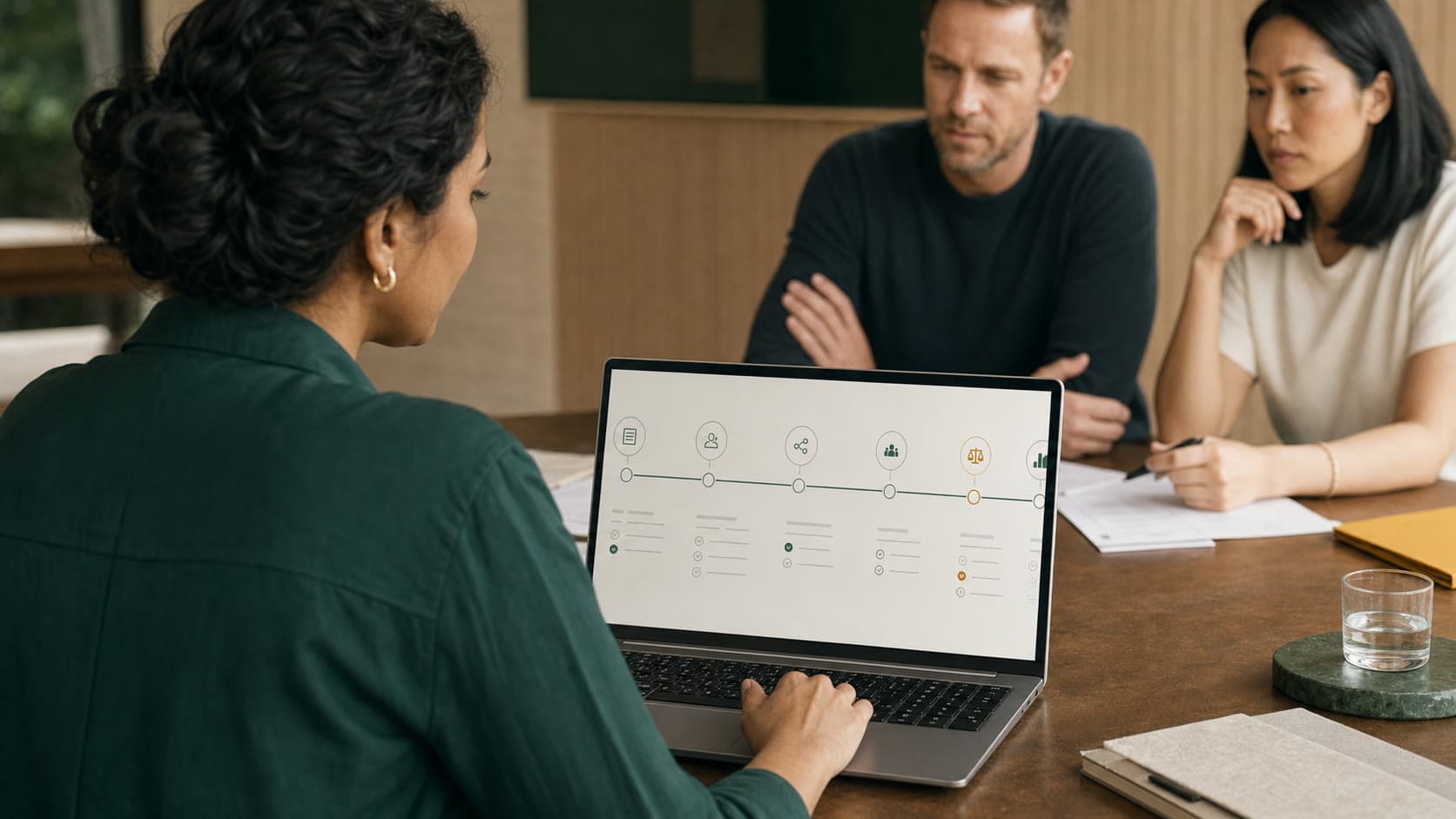
You bring Access to the people and systems that know the work.
We bring The method, analysis, design and technical delivery.
Phase one · Audit
Build the operating picture.
The first four stages replace assumptions with evidence. We connect enough of the business to understand what is actually happening and why.
- 01
Frame
Agree the business question, boundaries and measures that matter.
- 02
Instrument check
Confirm which systems and signals can give us a reliable view.
- 03
Capture
Connect operating data and gather focused input from the people doing the work.
- 04
Synthesise
Bring fragmented records, rules and observations into one coherent picture.
Phase two · Implementation
Make the best move real.
The next four stages turn the diagnosis into a working change. AI is used where it makes the workflow more useful, reliable or efficient—not by default.
- 05
Diagnose
Find the constraints, root causes and evidence behind the visible symptoms.
- 06
Strategise
Compare opportunities by return, effort, risk and readiness.
- 07
Recommend
Define the smallest meaningful change that can prove its value.
- 08
Plan + execute
Redesign, build, test, document and hand over the working system.
Phase three · Support
Stay close while the capability takes hold.
Support is optional. We can help measure the result, refine the workflow and choose the next opportunity—but the system, documentation and operating knowledge are structured for your business to own.
Human by design
People are not an exception to the system. They are part of it.
During design, we make every boundary explicit: what runs automatically, what AI can prepare, who makes the decision and how exceptions return to a person. That is how the business stays in control of where automation goes—and where it does not.
Audit before automation
Begin with the evidence your business already holds.
We’ll do the connecting, analysis and prioritisation—then show you the most useful place to act.
Start a conversation